Learning Pathways is here: Your new dementia training guide, giving you personalised learning opportunities in seconds.
Start now at learningpathways.dta.com.au
Sign in or Create account
Contact us

Training

A range of dementia education, resources and events for the Australian workforce.

  • Browse all Courses
    • Behaviour
    • Dementia Awareness and Understanding
    • Dementia Diagnosis and Support
    • Diversity
    • Enabling Environments
    • Physical Wellbeing
  • Browse all Modules
  • Browse all Events
    • Virtual Classroom
    • Webinar
    • Workshop

Looking for a training solution for your organisation?
Explore our Commissioned Training

Learning Pathway Find and save personalised dementia training in seconds. Try it now!

Dementia Knowledge to Action Program

Become a guide who can lead, coach, and influence within your care setting.

Online and face to face learning, mentor support and ongoing endorsement with DTA available.

Free in all states and territories.

View program

Dementia Discovery

Are you new to dementia care?

Online short courses designed to increase your knowledge about dementia with tips on 'where to next' for training and resources.

Free to study.

View course

Resources

A range of free tools and practical resources you can use to help make a difference at your workplace.

  • Browse all resources
    • Application
    • Articles
    • Fact Sheet
    • Handbook
    • Print Materials
    • Toolkit
    • Video

Types of Support

DTA provides a range of services and support to organisations.

Find out more

  • Focus Areas
    • Changed Behaviour
    • Environments
    • Medication Management
    • Pain Management
  • Training Solutions
    • Environments Training Program
    • Tailored Training Programs
    • Train The Trainer

About

Find out more about Dementia Training Australia.

  • Learn More
    • About DTA
    • Aged Care Quality Standards
    • Australian Journal of Dementia Care
    • Dementia Education Standards Framework
    • Learning Pathways
  • Get Involved
    • Careers
    • Contact
Browse courses Sign in Contact us
Search

Popular search terms:

  • online courses,
  • tailored training,
  • consultancy,
  • membership,
Loading...

Thank you

  1. Home
  2. News
  3. New standards – An opportunity to improve medication use in residential aged care

New standards – An opportunity to improve medication use in residential aged care

06 May 2019 3 min read
  • aged care
  • aged care quality standards
  • antipsychotic
  • medication management
  • residential aged care
  • residential care
  • responsive behaviours

Responsive behaviours are experienced by many people who are living with dementia. Non-medication approaches are overwhelmingly the most appropriate and effective means of providing support.

pills poured from a pill bottle into a hand
The name of this focus area is changing from "Responsive Behaviours" to "Changed Behaviour". You may see both terms while we transition our content to Changed Behaviour.

Standard 3 of the new Aged Care Quality Standards states that organisations must demonstrate that each consumer gets clinical care that is best practice, tailored to their needs, and optimises their health and wellbeing.

In terms of the use of medications to support people living with dementia who demonstrate responsive behaviour, what does ‘best practice’ mean, and how can we achieve this?

Responsive behaviours are experienced by many people who are living with dementia. Non-medication approaches are overwhelmingly the most appropriate and effective means of providing support.

Both Australian and international clinical guidelines continue to recommend that antipsychotic medications offer limited effectiveness for responsive behaviours. Furthermore, their use is associated with a risk of serious harm and death.  Medications should only be considered as a last resort when all possible non-medication approaches have failed, and only if the person living with dementia is experiencing distressing psychosis or a responsive behaviour that is harmful/severely distressing to themselves or puts others at risk. It is also recommended that the lowest possible dose is used for the shortest possible time if these medications are prescribed.

However, many residential aged care staff have conveyed difficulties in following these best practice guidelines for a number of reasons, including a lack of staff knowledge, a lack of confidence when communicating with prescribers, and inadequate medication management processes. As a result, potential unnecessary use of antipsychotic medications appears to be widespread.

The Department of Health has recently updated provider resources for the Aged Care Quality Standards to address concerns about the inappropriate use of antipsychotic medications as a form of chemical restraint.

The guidance for Standard 3 now refers to medications being “prescribed inappropriately in people aged 65 years and over for their sedative effects – that is, a form of chemical restraint for people with psychological behavioural symptoms of dementia or delirium”.

Share

Tags

  • aged care
  • aged care quality standards
  • antipsychotic
  • medication management
  • residential aged care
  • residential care
  • responsive behaviours

The Department has provided residential aged care facilities with the Guiding principles for medication management in residential aged care facilities to assist managers and staff in providing safe, quality use of medicines.

In announcing better regulation of chemical and physical restraint in residential aged care, the Minister for Senior Australians and Aged Care Ken Wyatt referred to the work of Dementia Training Australia (DTA) to upskill the aged care workforce in this area.

We offer a Medication Management Consultancy as part of our Tailored Training Packages for aged care organisations.

The Medication Management Consultancy aims to help reduce antipsychotic medication use for responsive behaviours, promoting safe and quality use of these medications if they are prescribed. Supporting and empowering staff to work towards practice change, through the development of sustainable processes based on evidence-based guidelines, forms a key facet of this consultancy.

Already we have seen great improvements for both residents and staff within many organisations who have completed the consultancy, including our work with Baptistcare at the Dryandra site.

How DTA may help your organisation meet Standard 3

  • the Antipsychotic Tracking Tool (APTT), which helps aged care providers monitor their use of antipsychotic medications by generating audit reports and graphs to determine prevalence of use
  • a one-hour online course
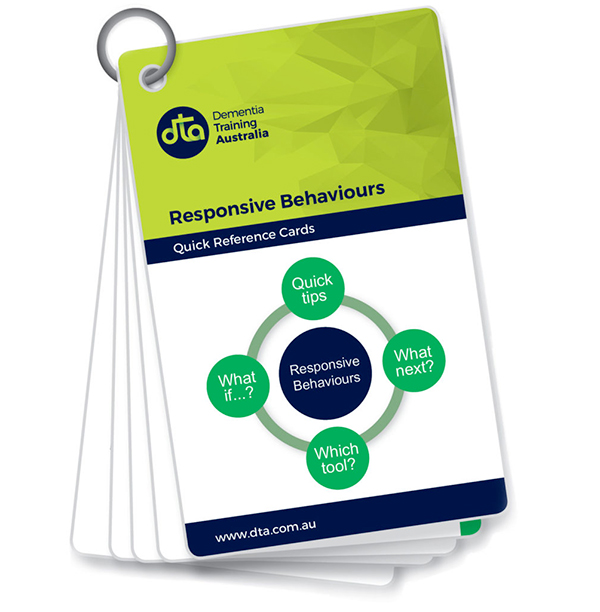
  • a Medication Management App (also available as self-print quick reference cards).

As the new Aged Care Quality Standards come in to force on 1 July, there is an opportunity for residential aged care managers and staff to utilise DTA’s freely available resources.

It is important that organisations and staff feel confident in addressing the new standards, and these resources can assist in preparing for accreditation. More importantly, they can improve practice regarding antipsychotic medication use in residential aged care, ultimately leading to better outcomes for residents and staff.

Author

Bronwen Wright

Medication Management Consultant

Bronwen is based at University of Western Australia (UWA) in Perth

Share

Facebook Twitter LinkedIn

Related Articles

Cognitive decline partenership centre logo

31 Jul 2016

Future Planning And Advance Care Planning: Why It Needs To Be Different For People With Dementia And Other Forms Of Cognitive Decline

This report contains seven key findings to improve the uptake and quality of advance care planning for people with cognitive decline

National Dementia Conference

22 May 2023

Dementia Training Australia to speak at the 14th Annual National Dementia Conference

Isabelle Meyer, Executive Director and Jason Burton, Associate Executive Director at Dementia Training Australia are looking forward to speaking at the 14th Annual National Dementia Conference...

Loading...
Close
Back to top
1300 229 092
Stay Connected
Mailchimp
Visit our Facebook page Visit our Twitter page Visit our LinkedIn page Visit our Instagram page
  • Courses
    • Behaviour
    • Dementia Awareness and Understanding
    • Dementia Diagnosis and Support
    • Diversity
    • Enabling Environments
    • Physical Wellbeing
  • Events
    • Workshop
    • Virtual Classroom
    • Webinar
  • Resources
  • Types of Support
    • Medication Management
    • Changed Behaviour
    • Pain Management
    • Environments
    • Tailored Training
    • Environments Training Program
    • Train The Trainer
  • Australian Journal of Dementia Care
  • Dementia Education Standards Framework
  • Aged Care Quality Standards
  • Learning Pathways
  • Rural and remote Australia
  • Contact
    • Careers
    • Submit a DSA Referral
    • Help
Aboriginal flag Torres Straight Islander flag

DTA would like to show our respect and acknowledge the traditional custodians of these lands. We extend this respect to elders’ past, present and emerging, and to all Aboriginal and Torres Strait Islander peoples. We also pay respect to Aboriginal and Torres Strait Islander peoples living with dementia and their carers.

Aboriginal Artwork

© Copyright Dementia Training Australia®. All rights reserved. Dementia Training Australia is a training services program delivered by the University of Wollongong. It is supported by funding from the Australian Government under the Dementia Training Program. This website uses dementia terminology current at time of publication.

  • Privacy Policy
  • Terms and Conditions