Dementia care resources for Culturally and Linguistically Diverse Communities (CALD).
01 Dec 2016
5 min read
- ajdc
- CALD
- communication
- dementia
- dementia friendly environments
- external article
- professional development
- resources
- training
A compilation of web based CALD resources which may assist in the delivery of culturally appropriate care to older people.
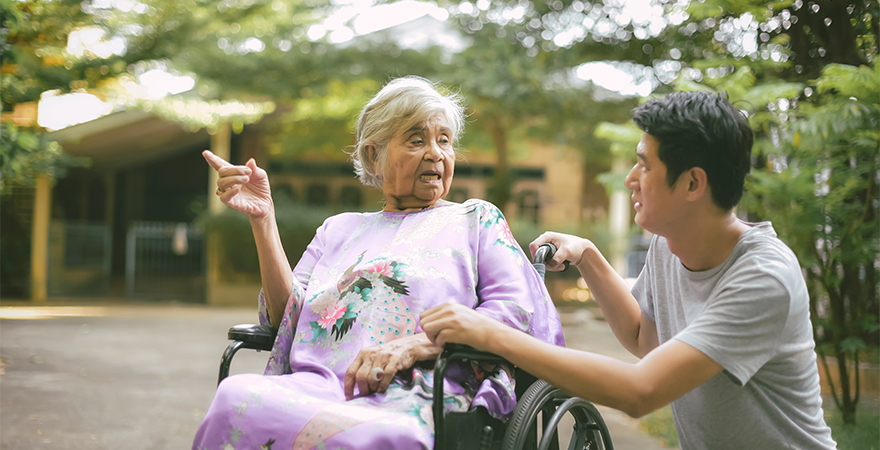
A compilation of web based CALD resources which may assist in the delivery of culturally appropriate care to older people.
Overview
- PICAC (Partners in Culturally Appropriate Care): This is a national initiative funded by the Australian Government to support residential and community aged care service providers to deliver culturally appropriate care to older people from CALD communities. Seven PICAC organisations (the PICAC Alliance) provide a range of activities including culturally-specific training and professional development in areas such as culture and dementia and cultural awareness; resources; and demographic data.
- Centre for Cultural Diversity in Ageing (funded by the Australian Government to provide services in Victoria as part of the PICAC program): as well as providing training, consultancy, resource development and project work in that state, the centre’s website has an excellent resources section on dementia care which includes a practice guide with a list of key considerations for addressing cultural diversity in care services.
- Communication cards for enhancing communication with people in their preferred language. They depict a range of daily activities and situations that can be used to prompt discussion, assist with directions and clarify needs. These are free to download and available in 25 languages.
- Aged care signage: a package of signs for aged care facilities and services to help clients navigate their way around a home or service. Free to download and available in 25 languages.
- Publication links to multilingual aged care and health resources produced by other organisations.
- Cultural diversity and ageing research, Census data and demographics, reports and service usage data. Available at: culturaldiversity.com.au
- CALD Guidelines For Dementia Patients In Aged Residential Care: This publication by Dr Kathy Peri and Dr Gary Cheung (University of Auckland 2016) covers CALD principles, a suggested model of care, and best practice guidelines when working with CALD residents with dementia in areas including communication, food, eating environment, personal care, psychosocial perspective, spiritual, emotional support, traditional therapies, meaningful leisure activities, palliative care, and assessment. Available at: ecald.com
- Dementia Care And Culture: For Environmental Services Staff: often environmental services staff (cleaning, laundry and maintenance) have little or no formal training about caring for people with dementia. Many are also from non-English speaking backgrounds. Dementia Care And Culture: For Environmental Services Staff (L Bilogrevic & B Harrison, Multicultural Aged Care Services Geelong Inc, 2015) is a workbook designed to be used in a face-to-face, facilitated workshop with environmental services staff working in multicultural residential aged care. It’s free to download and, while the content can be used with acknowledgment of the source, it’s not designed for staff to work through without guidance. Available at: culturaldiversity.com.au
- Perceptions Of Dementia In Ethnic Communities (Dementia Australia Vic): a practical resource kit to assist planners and service providers better understand and develop appropriate services for the varying support needs of older CALD Australians from Arabic, Chinese, Croatian, Greek, Italian, Macedonian, Polish, Russian, Serbian, Spanish, Turkish and Vietnamese communities. It has individual community profiles and the following information for each: migration history and language; perceptions of dementia; diagnosis and treatment; role of the family; attitudes to community care; attitudes to residential care; attitudes to counselling; religion and its role in dementia care; key issues to consider; key community contacts; and dementia-specific information. Available at: culturaldiversity.com.au
- Culturally Appropriate Dementia Assessment Tools: Dementia Australia (Vic): standard assessment tools, such as the Mini-Mental State Examination (MMSE), are not easy to translate and administer to CALD populations. This site has links to resources developed for screening and diagnostic assessment of people from non-English speaking backgrounds. The tools include: the Rowland Universal Dementia Assessment Scale; screening tool guidelines for practitioners, service managers and policy makers; and the Dementia Outcomes Measurement Suite (DOMS). DOMS and other assessment tools are also available on the Dementia Collaborative Research Centre’s website at https://dementiaresearch.org.au/
- eCALD website: the resources here, including Cultural Competence Assessment Tools, are free to download and include a cultural competence self-assessment checklist to help organisations, service providers or individuals determine their level of cultural competence. Available at: ecald.com
- Customs and Beliefs – Death and Dying (Loddon Mallee Regional Palliative Care Consortium): a brief resource which may assist health care workers to understand the different cultural or religious approaches and beliefs around death and dying. Available at: lmrpcc.org.au
- Community Profiles For Health Care Providers: is a practical resource to help health workers better understand the health beliefs, pre-migration experiences, communication preferences and other aspects of their clients’ cultures, with information on 18 multicultural communities. Developed for Queensland Health by Dr Samantha Abbato in 2011. Available for free download at: health.qld.gov.au
Related Articles

07 Sep 2023
New environment and design guidelines a huge step forward for dementia patient care
Dementia Training Australia, UOW and the Federal Government collaborate on National Aged Care Design Principles and Guidelines.
28 Nov 2018
New standards call for dementia-friendly design
The design of a building can change the way we engage and interact, move around, and even our mood.